Birmingham Business Births, Closures and Survival: The ONS 2024 Evidence
Birmingham recorded 6,500 registered-enterprise births and 5,145 provisional deaths in 2024. Here’s how to interpret the annual rates and separate survival cohorts.
Published
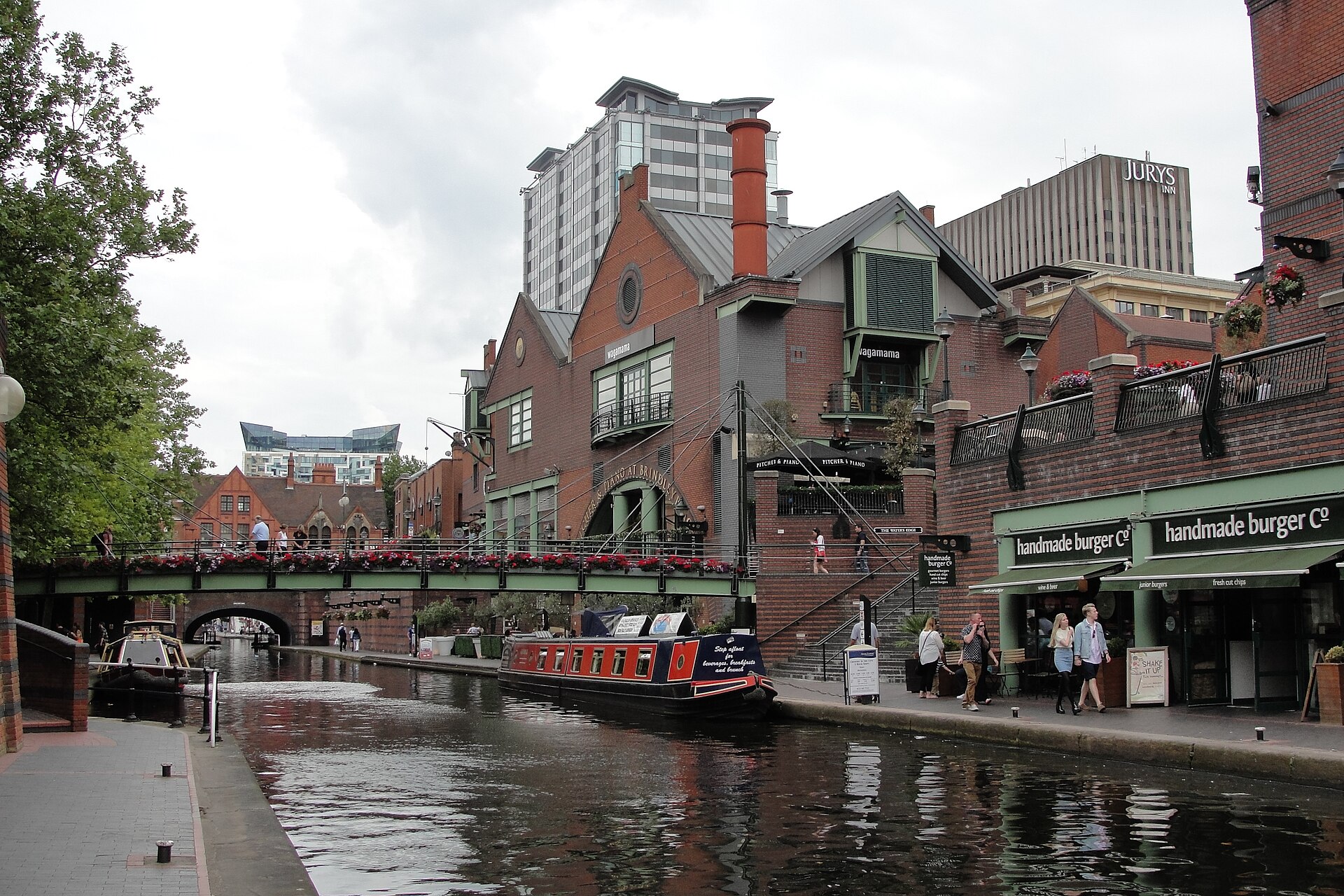

Birmingham recorded 6,500 registered-enterprise births and 5,145 provisional business deaths in 2024, according to the Office for National Statistics, the UK’s official statistics producer. Births exceeded deaths, but understanding that balance requires care. The annual figures describe activity across the business register, while survival figures follow enterprises born in a particular year.[3]
Which Birmingham Do These Figures Cover?
The figures cover Birmingham metropolitan district, identified by the local-authority code E08000025. The ONS identifies this as a metropolitan district in the West Midlands. These are district-wide results, so they cannot establish how many businesses opened in the city centre or describe performance across the wider West Midlands.[2][3]
Birmingham’s Annual Business Figures for 2024
There were 43,175 active registered enterprises in Birmingham during 2024. An enterprise counts as active if it had turnover or employment at any point during the reference year. That makes this an annual population, including activity during the year, rather than a count taken on 31 December.[3]
| Measure | Birmingham, 2024 | Basis |
|---|---|---|
| Active registered enterprises | 43,175 | Turnover or employment during the year |
| Enterprise births | 6,500 | Published annual count |
| Enterprise deaths | 5,145 | Provisional annual count |
| Approximate birth rate | 15.06% | 6,500 divided by 43,175, multiplied by 100 |
| Approximate death rate | 11.92% | 5,145 divided by 43,175, multiplied by 100 |
Our analysis of the ONS Business Demography 2024 workbook calculates both rates using the same denominator: Birmingham’s 43,175 active enterprises in 2024. The percentages are approximate because the underlying counts are control-rounded to multiples of five. The death rate also inherits the provisional status of the death count.[3]
Subtracting the published death count from births gives a positive balance of 1,355 enterprises. It would be misleading to describe that as 1,355 extra businesses trading at the end of the year. Establishing a change in the active-business population requires comparable annual population figures. This calculation measures the balance between two flows within 2024.[3]
What Counts as a Business Birth or Death?
A business birth is identified when an enterprise appears in the active population for a year after being absent from both preceding years. That definition gives the 6,500 figure its meaning. It should not be read as a count of new shopfronts or Companies House incorporations.[3]
For deaths, the ONS definition looks forward: an enterprise active in the reference year is absent from the following two annual active populations. To publish an early estimate, the ONS adjusts deaths for the latest two observation years to allow for possible reactivations. Birmingham’s 2024 death count can still be revised.[3]
The workbook draws on the Inter Departmental Business Register, whose main administrative sources are VAT trader and PAYE employer information. These registered-enterprise figures should not be treated as a census of every self-employed person working in Birmingham.[3]
Survival Follows a Birth Cohort
Of Birmingham’s 6,105 enterprise births in 2023, 5,630 survived into 2024, giving a published one-year survival percentage of 92.2% when rounded to one decimal place. Here the denominator is the original 2023 birth cohort. The 43,175 active enterprises used for the annual birth and death rates play no part in this calculation.[3]
| Birmingham Birth Cohort | Original Births | Surviving in 2024 | Survival Period | Published Percentage, Rounded |
|---|---|---|---|---|
| 2023 | 6,105 | 5,630 | One year | 92.2% |
| 2019 | 7,430 | 2,205 | Five years | 29.7% |
Both rows reach 2024, but they answer different questions. The first follows enterprises through one year. The second follows an older cohort over five years. Comparing 92.2% with 29.7% cannot establish that survival improved or deteriorated between cohorts, because the follow-up periods differ.[3]
Survival means activity through employment or turnover during at least part of the relevant follow-up year. It does not establish profitability, expansion or continuous occupation of the same premises. For someone weighing a business decision, these percentages provide historical context rather than a forecast of their own prospects.[3]
The Registration Warning in Birmingham’s Older Cohort
Birmingham’s 2019 survival row carries an asterisk. The workbook explains that this flags districts identified as having more than 500 businesses registered at a single postcode. That warning belongs alongside the five-year result, because a concentration of registrations can complicate a place-based interpretation.[3]
The flag does not quantify how much those registrations affect Birmingham’s survival percentage. Nor does it identify how many occupied shops, offices or workshops they represent. A premises-level account of local openings and closures needs separate evidence connecting enterprises to their operating locations.[3]
How the Figures Were Calculated
This analysis uses the 2024 workbook as at 20 October 2026. The dataset was released on 20 November 2025, and its landing page records an amendment dated 15 January 2026. The annual results describe 2024 business activity, rather than conditions in 2026.[1][3]
The annual counts come from the E08000025 row, row 141, in Tables 1.1d, 2.1d and 3.1d. Survival figures use row 159 in Table 5.1a and row 153 in Table 5.1e. Birth and death rates are our calculations from rounded counts, shown to two decimal places. Survival percentages are the workbook’s published values, displayed to one decimal place.[3]
For a future Birmingham comparison, follow the same birth cohort as more years become available, or compare different cohorts at the same age. Check revisions to the provisional death count before carrying the 2024 balance into a longer trend.[3]
Sources and checks
These sources were used for this article. Availability, prices and service details can change after the stated check date.
- Business demography, UK
- Office for National Statistics
Checked 20 October 2026.
The dataset was released on 20 November 2025. The landing page records an amendment dated 15 January 2026. The dataset covers annual business births, deaths and survival by geography and industry.
- Birmingham (E08000025) - ONS
Checked 20 October 2026.
ONS identifies Birmingham as a metropolitan district in the West Midlands. The article’s geographical scope is Birmingham metropolitan district, E08000025, rather than the city centre or wider region.
- https://www.ons.gov.uk/file?uri=/businessindustryandtrade/business/activitysizeandlocation/datasets/businessdemographyreferencetable/current/businessdemographyexceltables2024.xlsx
Checked 20 October 2026.
Tables 1.1d, 2.1d and 3.1d, row 141, report 6,500 births, 5,145 deaths and 43,175 active enterprises for Birmingham in 2024. Our calculations from those rounded counts give an approximate birth rate of 15.06%, an approximate death rate of 11.92% and a births-minus-deaths balance of 1,355. Table 5.1e, row 153, reports 6,105 births in the 2023 Birmingham cohort, with 5,630 surviving one year and a published survival percentage of 92.21949221949221%. Table 5.1a, row 159, reports 7,430 births in the 2019 Birmingham cohort, with 2,205 surviving five years and a published survival percentage of 29.676985195154774%. The workbook defines activity, births, deaths and survival using annual enterprise populations. The latest two years of death estimates are provisional and adjusted for reactivations. Counts are control-rounded to base five. The register’s main administrative sources are VAT trader and PAYE employer information. The asterisk on Birmingham’s 2019 survival row flags a district identified as having more than 500 businesses at one postcode. Enterprise counts do not establish occupied-premises counts, profitability or an individual business’s future prospects.